

Is Silicone Recyclable? Yes — Here's What Happens to Your Scrap
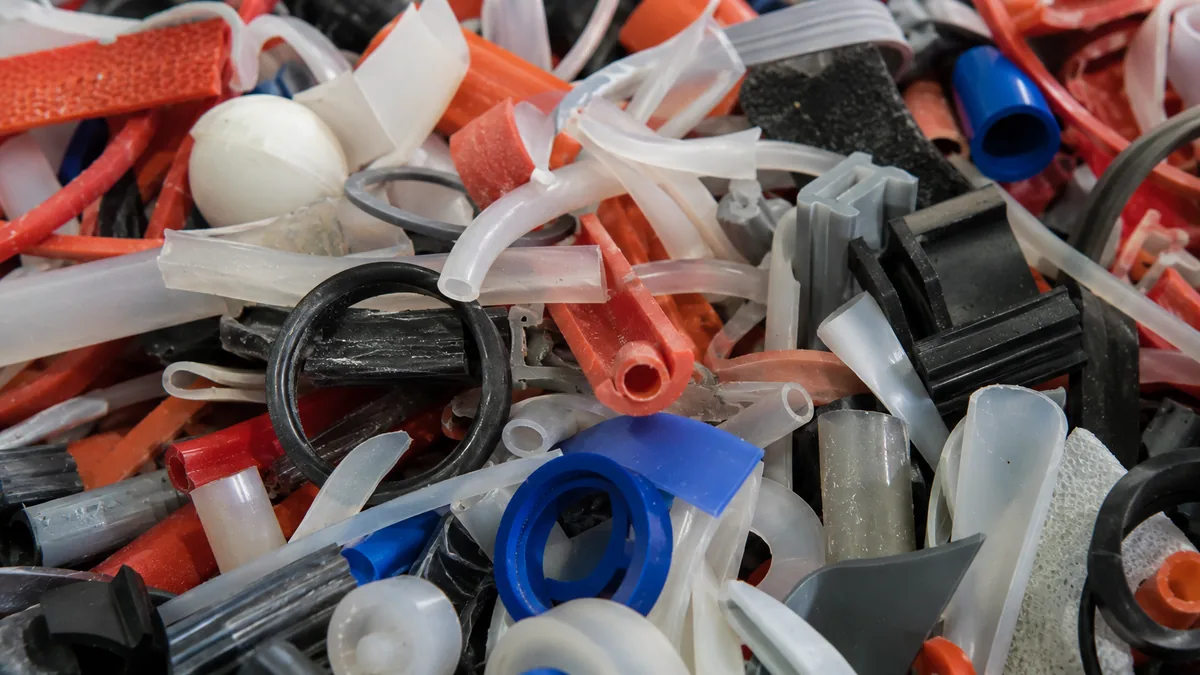
Short answer: yes, silicone is recyclable — including the cured silicone rubber, scrap, seals and spent fluid most factories assume can only be dumped. If your plant generates silicone waste and you're paying to send it to landfill, you're paying to throw away a material that can be recovered into fresh, industrial-grade silicone oil.
Why people assume silicone can't be recycled
Silicone earns its place in industry because it's tough: thermally stable, chemically inert, water-repellent and long-lasting. Cured silicone rubber doesn't melt and reflow the way a thermoplastic does, so it can't just be shredded and re-moulded. That's why most plants treat silicone scrap as a dead-end — bag it, pay a contractor, send it to landfill.
That assumption is wrong. Silicone can't be melted back, but it can be chemically broken back down. The same stable Si–O–Si backbone that makes cured silicone so durable can be cracked apart under controlled heat and rebuilt into usable oil.
How silicone is actually recycled
Recycling cured silicone is a controlled chemical process — depolymerisation, not a clean-and-reuse. At Ecovalley it runs end to end:
- Collection & sorting — silicone waste is gathered and classified by type and grade.
- Shredding — solids are mechanically reduced to a workable feed.
- High-temperature cracking — cured silicone polymers are thermally broken back into reactive siloxane precursors.
- Filtration & distillation — impurities are removed and target fractions are distilled for purity.
- Re-polymerisation — the precursors are rebuilt to a specific viscosity and grade.
- Quality testing & dispatch — every batch is verified, then drummed for transport.
What comes out the other side isn't a downgraded by-product. It's PDMS and DMC silicone oil — the same industrial-grade fluids the market makes from virgin feedstock, engineered to a target viscosity.
The point most plants miss: silicone is an energy-intensive, crude-oil-derived material. The value didn't disappear when the part cured — it's still locked in the scrap. Recycling recovers it. Landfill burns it.
What silicone waste can be recycled?
If it's silicone, it's almost certainly recoverable. The streams a typical manufacturer produces — often without thinking of them as "silicone waste" — include:
- Silicone rubber scrap — offcuts, trim and rejected mouldings.
- Moulding flash & sprues — the everyday waste of any silicone moulding line.
- Gaskets, seals & O-rings — production rejects and end-of-life parts.
- Electrical insulators & keypads — from electrical, electronics and appliance manufacturing.
- Spent silicone fluids — used process oils, release agents and defoamer residues.
- Obsolete or expired inventory — material written off and sitting in storage.
Both cured silicone solids and used silicone oils are recoverable. If you're not sure whether a given stream qualifies, that's exactly the kind of thing worth a quick check.
Is silicone waste worth anything?
It has recoverable value — which is the part that changes the maths. Most plants treat silicone scrap as a cost: a line item for waste collection and landfill. Routed to a recycler instead, that same material becomes feedstock for industrial-grade oil, and the disposal cost turns into recovered value plus a cleaner waste record.
There's a compliance dimension too. Under India's tightening waste and Extended Producer Responsibility framework, a documented recycling route is a stronger position than a landfill receipt — and it gives you a real circular-economy story for ESG reporting rather than a paragraph of intentions.
Frequently asked questions
Is silicone recyclable?
Yes. Cured silicone rubber, scrap, seals, keypads, mould flash and spent silicone fluid can be recycled. Controlled high-temperature depolymerisation cracks cured silicone back into siloxane precursors, which are filtered, distilled and re-polymerised into industrial-grade silicone oil instead of going to landfill.
Can cured silicone rubber be recycled?
Yes. Cured silicone rubber doesn't melt and reflow like a thermoplastic, but it can be chemically depolymerised and rebuilt into fresh silicone oil. That's how rubber scrap, gaskets, insulators and mould residue are recovered into usable PDMS and DMC.
Is silicone waste worth anything?
Yes. Silicone is energy-intensive and crude-oil-derived, so the scrap retains recoverable value. Instead of paying to landfill it, manufacturers can route it to a recycler who recovers it into industrial-grade silicone oil — turning a disposal cost into recovered value.
What kinds of silicone waste can be recycled?
Silicone rubber scrap, moulding flash and sprues, rejected or expired parts, gaskets and seals, electrical insulators, keypads, spent silicone fluids and obsolete inventory — both cured solids and used oils are recoverable.
How do I recycle silicone waste in India?
Contact a dedicated silicone recycler such as Ecovalley Silicones (established 2016, plant in Sonipat, Haryana). Tell us the type and approximate volume of silicone waste you produce; we assess what's recoverable and arrange collection, then reprocess it into industrial-grade PDMS and DMC.
Sitting on silicone waste? Let's see what it's worth.
Tell us what your plant produces — rubber scrap, mould flash, rejected parts, spent fluid — and we'll tell you what's recoverable and arrange collection. Stop paying to dump a material you can recover.
Talk to us about your silicone waste